The Two-Minute Event: How Trailers Became Britain’s Real Blockbusters
Photo: Secret_Cinema, CC BY 2.0, via Wikimedia Commons
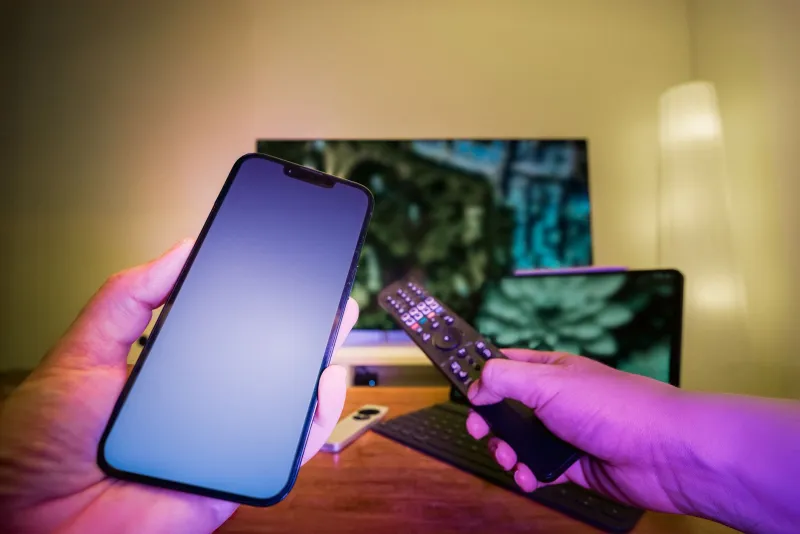
There is a particular noise that hits a British group chat when a teaser drops. It is not quite a cheer and not quite a gasp. It is the sound of twelve people simultaneously sending the same link, followed by a voice note that begins: 'Right, did you see the bit at 00:47?' By the time the kettle has boiled, someone has posted a frame-by-frame breakdown, someone else has claimed the whole plot is spoiled, and a third person has announced they are not watching anything else until release. This is what passes for a cultural event in 2026. And it happened before the film even came out.
The drop is the new opening night
Trailers used to be the advert you sat through before the film. Now they are their own release window. A big teaser arrives with a countdown, a poster, a press cycle and a thousand takes before anyone has bought a ticket. Studios do not just schedule these things any more; they stage them. A Tuesday lunchtime drop is designed to catch the UK on a break, send TikTok into overdrive and give the timelines something to argue about until teatime.
The result is that the trailer has become the first bite of the story. It has its own opening weekend, its own discourse and its own hangover. For a certain kind of film fan, the two-minute clip is not a preview of the main event. It is the main event, with a post-credits sequence made of reaction videos.
A fandom built on homework
What makes this different from the old days of watching a trailer before a DVD? The homework. Audiences are not just watching; they are pausing, zooming, stitching and theorising. A blurred background detail becomes a casting rumour. A single line of dialogue becomes a three-act structure. Someone on Letterboxd writes a 900-word essay about the colour grading and someone on TikTok slows the whole thing down to prove that a shadow is actually a returning character.
Trailer analysis is homework that feels like play. It gives fans something to do with their enthusiasm before the thing they are enthusiastic about actually exists. That is powerful. It is also a trap. The more time we spend building the film in our heads, the harder the real film has to work to match the version we have already directed, cast and edited ourselves.
Studios have learned to feed the beast
Marketing departments are not stupid. They can see where the attention is going. Trailers are now cut for freeze-frame culture, for the screenshot, for the reaction video, for the reply guy who needs a theory by Friday. A teaser can be deliberately cryptic, or deliberately generous, but either way it is built to be taken apart.
The trailer is no longer just an advert for the film. It is a content pillar in its own right. That is why we get teasers for teasers, posters that are really puzzles, and cast announcements that arrive like weather events. The hype cycle is not an accident. It is the product. And in a crowded market, a studio would rather have everyone talking about two minutes today than quietly ignoring two hours next month.
The cinema bit is getting awkward
There is a cost, though, and you can feel it in the cinema. British audiences have already been trained by years of pre-roll adverts, charity appeals and a generous serving of trailers before the actual film. Now they arrive having watched the key trailer twenty times on their phone. The big-screen moment is meant to be the payoff, but sometimes it feels like a repeat.
When the film finally lands, the conversation has already happened. The theories have been posted. The spoiler panic has been had. The group chat has moved on to the next drop. Opening weekend can still be huge because the hype machine works, but the legs of a release depend on something the trailer cannot manufacture: word of mouth. If the trailer is the party, the film is the clean-up. Nobody wants to be handed a bin bag after two minutes of confetti.
When the film finally turns up
The strange thing is that trailer culture can still be brilliant when it remembers its place. A great trailer should open a door, not show you the whole room. It should give you a taste and leave you hungry. The trouble starts when the teaser is so carefully engineered for discourse that the film becomes a footnote to its own marketing.
Streamers have the same problem. A new series can spend months drip-feeding first-look images and moody clips, building a fandom before a single episode has been reviewed. By the time the show arrives, the audience has already decided what it is. The watercooler conversation has been outsourced to the comment section. We have had the argument before we have seen the evidence.
A healthier hype cycle
None of this means we should stop watching trailers. That would be like refusing to read a menu because you once had a bad starter. The two-minute clip is still one of the most efficient pieces of storytelling in modern media. It can make a star, sell a genre and turn a quiet November into a talking point.
But there is a balance to be struck. Studios could leave a little more on the table. Audiences could save a bit of wonder for the dark of the cinema. And the rest of us could admit that a trailer is not a film, no matter how many breakdowns we watch. The best cultural moments still happen when the lights go down and the two-minute clip is finally allowed to become two hours. The trailer can be the headline. It should not be the whole story.