The Five-Minute Standoff: Why Nobody Knows How to Leave the Cinema Anymore

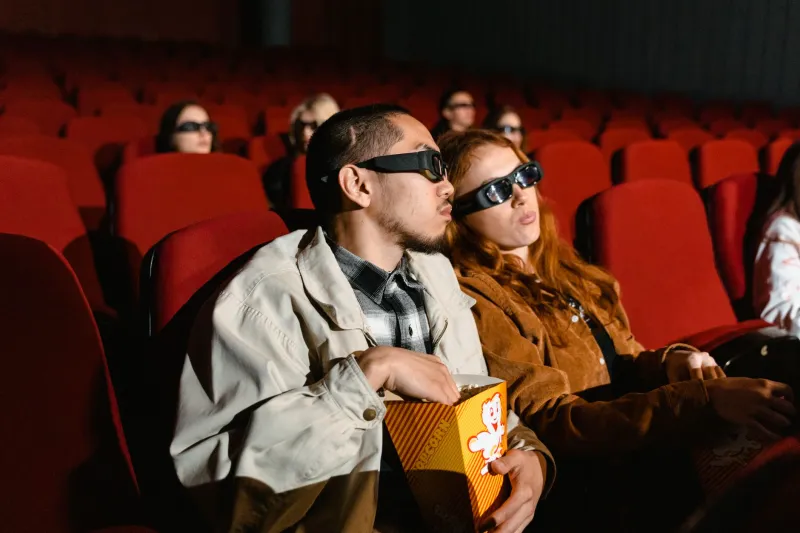
Photo by Photo by Krists Luhaers on Unsplash on Unsplash
There is a moment in every cinema trip now when the film stops being the main event. The hero has hugged the love interest, the explosion has stopped ringing in your ears, the final needle drop is fading out — and then a familiar panic ripples across the row. Half the audience is reaching for coats. The other half has locked eyes on the screen like it owes them money. Somewhere in the middle, a person who has already stood up is hovering in the aisle, caught between British politeness and the fear of missing a thirty-second scene featuring a man in a cape saying a name.
Welcome to the end-credit standoff. It is the most reliably tense five minutes in modern cinema, and it has absolutely nothing to do with the film.
From cheeky extra to contractual obligation
Cast your mind back to 2008. Iron Man rolls credits, and a certain Nick Fury appears to talk about a wider universe. It was a wink. A bit of fun for the people who stayed. For a while, that was the deal: the post-credits sting was a bonus for the devoted, a little Easter egg for the sort of person who reads the trades and owns too many T-shirts.
Then it became a business plan. Now every franchise, every would-be franchise, and several films that have no business setting up a sequel are tacking something onto the end. Sometimes it is a genuine reveal. Sometimes it is a famous face doing a cameo that will be explained in a press release three years later. Sometimes it is just a logo, a sound effect, and a sense that you have been mildly mugged by marketing.
The result is that the end credits are no longer the bit where you leave. They are the bit where you wait. And because nobody wants to be the person who walked out on the thing everyone is going to be talking about on Monday, the whole room is trapped in a low-level negotiation.
A nation of reluctant sitters
British cinema etiquette has never been particularly relaxed. We are a country that apologises to the seat when we stand up. So the post-credits scene has created a very specific social anxiety: the fear of being the first to leave and the fear of being the last to stay. You can feel it in an Odeon on a wet Tuesday. The credits roll. Two people in the third row make a break for it. A teenager checks their phone. Someone whispers, rather too loudly, 'there's another one after this.' A mum in a fleece says, 'we're not sitting through all that.' Her son looks like he is being asked to choose a side in a civil war.
Cinema chains have tried to help. Some put up little cards. Some have staff hovering at the back like bouncers at a very boring party. But the real problem is that nobody knows what kind of film they are in anymore. Is this a Marvel-style extended universe job, where the sting matters? Is it an auteur drama where the credits are the point and staying is a sign of respect? Is it a comedy that has tacked on a blooper reel because the test screening went badly? The audience has to guess, and guessing in a dark room full of strangers is never comfortable.
The ending has become a holding pattern
What the post-credits scene has really done is change how films end. A final scene used to be a full stop. Now it is often a comma, or a semi-colon, or a trailer for something that does not exist yet. Directors know that a chunk of the audience is waiting for the extra bit, so the actual ending has to compete with the promise of more. Sometimes that works. Sometimes it means the emotional climax is followed by a scene that says, 'don't worry, none of this really matters because there is a sequel.'
There is also the mid-credits scene, the post-credits scene, and the post-post-credits scene, which means the final five minutes have become a kind of administrative obstacle course. Stay too long and you are the weirdo still sitting there when the cleaners arrive. Leave too early and you miss the bit where a returning character says a single word and the internet loses its mind. The safest option is to sit through everything, which means the average cinema trip now comes with an unpaid overtime shift.
The treasure hunt is often better than the film
Here is the uncomfortable truth: the ritual has become more exciting than a lot of the movies it is attached to. The speculation is better. The group chat after is better. The YouTube explainer is better. The moment when someone leans over and whispers, 'I think that was the bloke from the other one,' is genuinely more thrilling than a lot of third acts. The post-credits scene has turned cinema-going into a treasure hunt, and treasure hunts are fun even when the prize is a bit rubbish.
But there is a cost. When every ending is a setup, no ending feels earned. When every credits sequence is a potential news story, the lights coming up feels like an interruption rather than a conclusion. And when the audience is already thinking about the next film before the current one has finished, something small but important gets lost: the pleasure of sitting in the dark and letting a story land.
Can we just bring back the lights?
Nobody is asking filmmakers to stop having fun. A good sting is a joyful thing. But there is a difference between a reward and a hostage situation. If cinemas want to help, they could be clearer about what is coming and when. If filmmakers want to earn the sit, they could make the extra bit feel like a gift rather than a trailer for a shareholders' meeting. And if audiences want to leave, they should be allowed to leave without a row of strangers silently judging them.
The post-credits scene is not going anywhere. It has become part of the furniture. But the standoff around it has become its own genre: half comedy, half social experiment, and entirely British. The film ends, the lights stay low, and we all have to decide who we are. The sitters or the leavers. The devoted or the done. Either way, the credits are no longer the end. They are the bit where the audience performs.